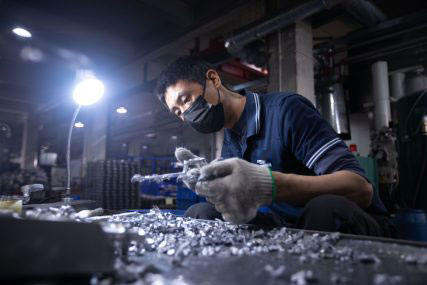
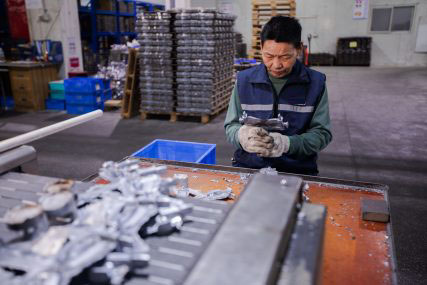
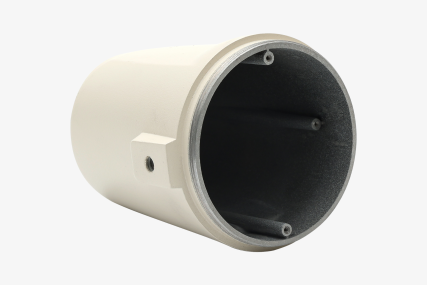
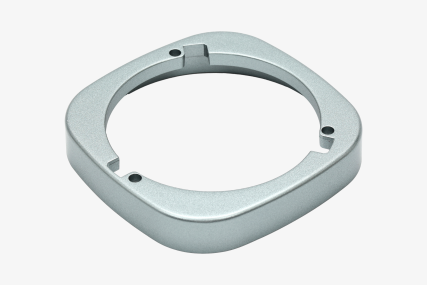
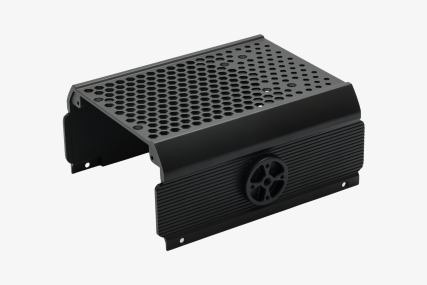
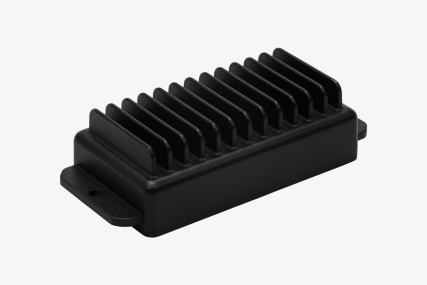
From rapid prototypes to high-volume production runs, XCD's die casting services have you covered. We work with aluminum, zinc, and magnesium, and handle everything from tooling to finishing.
20,000+ customers in over 120 countriesISO 9001, 16949, 13485 Certified
Our network of certified die casters runs 60+ machines, supporting intricate geometries and tight timelines. Services include die cast tooling, machining, and a range of finishes.
Die Casting Manufacturer with Advanced Production Facilities
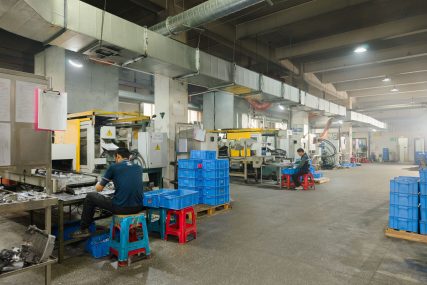
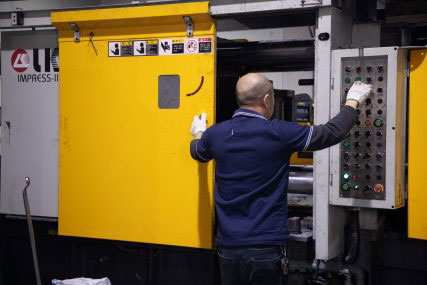
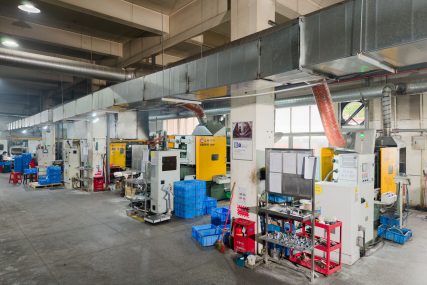
XCD is a certified die casting manufacturer equipped with 60+ advanced die casting machines, serving global customers across automotive, industrial, robotics, and electronics industries. Our factory integrates die casting tooling, high pressure die casting production, CNC machining, and finishing under one coordinated system.
60+
Die Casting Machines
ISO
9001, 16949, 13485
0.01mm
Tight Tolerance
1 Day
Fast Lead Time
XCD Die Casting Capabilities
Tolerance
High-precision die casted parts need secondary machining to meet tolerance requirements, achieving accuracy up to ±0.01mm
Minimum Wall Thickness
Aluminum alloy recommended 1.5mm, zinc alloy can go down to 0.8mm
Wall Thickness Ratio
Keep within 1:3 ratio to avoid uneven filling
Hole Diameter
Round holes smaller than 3mm diameter require secondary drilling. Threaded holes and external threads formed through secondary machining
20-25 days. Specific timing varies based on mold type and product structure complexity
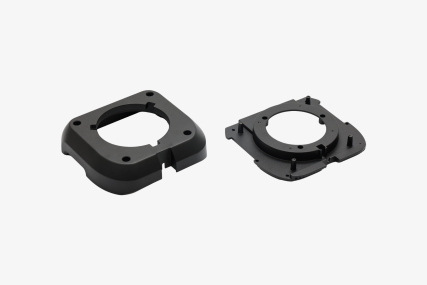
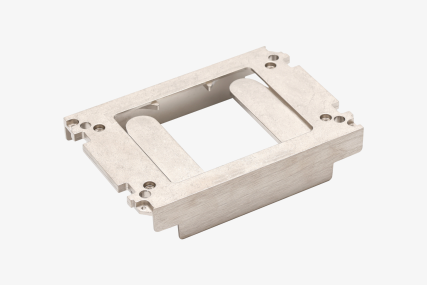
Die Casting Parts We Manufactured
Types of Die Casting Processes at XCD
To support a wide range of project needs, XCD provides three types of die casting services, suited for different materials and design complexities.
Cold Chamber Die Casting
Cold chamber die casting melts metal in a separate furnace before casting. The molten metal is poured into a cold chamber, where a piston pushes it into the die under high pressure. This process handles high melting point metals like aluminum. The separation prevents contamination and extends die life.
Applications: Car engine parts, aircraft components, and electronic housings where strength and precision matter.
Hot Chamber Die Casting
Hot chamber, or gooseneck casting, connects the melting furnace directly to the casting machine. A piston pulls molten metal from the furnace and injects it straight into the die. This creates faster cycle times and reduces waste since the metal stays hot throughout the process.
Applications: Low melting point metals like zinc, magnesium alloys — toys, hardware, decorative items, and small mechanical parts.
Semi-solid Die Casting
Semi-solid die casting uses metal in a paste-like state between liquid and solid. The metal is heated to this semi-solid condition, then slowly pushed into the mold with less turbulence than liquid metal. This process reduces porosity and creates stronger parts with better surface finish.
Applications: Aluminum and magnesium alloys for automotive parts, aerospace components, and applications that need high strength and quality.
Die Casting Materials & Finish
Die cast tooling uses hardened steel to withstand high temperatures and pressure. For die castings, non-ferrous metals are preferred for their fluidity and low melting points.
Hardened Tool Steel
Steel H13
Strong at high heat. Tough and crack-resistant. Stays hard when hot. Good for aluminum and magnesium casting.
Steel 8407
Handles heat changes well. Tougher than H13 steel. Conducts heat better and lasts longer. Good for heavy-duty casting work.
Steel 2344
Strong at high heat. Resists cracking from heat cycles. Easy to machine and polish. European steel grade for detailed parts.
Die Casting Alloys
Aluminum Die Casting
We use ADC12, A380, and more for high-performance aluminum casting parts: ADC10, A380, ADC12, Pure Aluminum, DM6, HA6, HA4, 6063.
Magnesium Die Casting
High strength, good machinability, and EMI shielding. Often used in electronics, automotive components, and handheld device housings. AZ91D, AM60B, AM50A.
Zinc Die Casting
Flows well in molds and holds tight tolerances. A good choice for small, detailed parts. ZAMAK2, ZAMAK3, ZAMAK5.
Surface Finishes
As Cast
Basic, functional finish with relatively smooth surfaces and minor tool marks, suitable for non-cosmetic applications.
Anodizing
Improves corrosion and wear resistance of aluminum cast parts, with color options that enhance durability and appearance.
Chromate Passivation
Commonly used for aluminum and zinc die casted parts, improves corrosion resistance and prepares surface for painting.
Painting
Adds color and improves appearance while offering additional protection against corrosion and wear.
Sand Blasting
Abrasive blasting that removes surface impurities and gives a uniform, matte texture. Improves paint adhesion.
Typical Die Casting Parts and Industry Applications
Die casting are widely used to manufacture structural and functional metal components that require dimensional stability, strength, and repeatability.
Medical Die Casting
Precision housings and device enclosures requiring dimensional stability and clean surface finish.
Automotive Die Casting
Engine housings, transmission cases, motor brackets, and structural supports requiring high strength.
Robotics
Precision brackets, gearbox housings, actuator components, and load-bearing structural parts.
Consumer Products
Aluminum enclosures, LED heat sinks, internal frames, and protective housings for compact electronic devices.
Quality Assurance
At XCD, quality drives every step — from the tools we use to the standards we uphold. Our ISO 9001, ISO 14001, and IATF 16949 certifications guarantee consistent excellence.
Advanced Inspection Equipment
We use professional testing equipment for precise measurement and verification. Spectrometers analyze metal composition, coordinate measuring machines inspect complex 3D shapes, 2.5D instruments verify detailed features, and height gauges handle basic dimensions.
Comprehensive Testing Procedures
Parts go through four main tests: material analysis, durability testing, corrosion testing, and functional testing. These check your parts meet composition specs, handle tough conditions, resist environmental damage, and seal properly when needed.
Proven Quality Standards
Over 90% of parts pass first article inspection. And if there's ever a quality issue, we'll remake it for free. Every part gets checked before it leaves our facility.
Ready to See Our Quality Standards in Action?
Get your quote today and experience the difference.
We reduce your die casting costs through expert mold design and free DFM analysis, ensuring the most efficient material usage.
/02
Fast Lead Time
Leveraging our in-house facilities and certified factory network, we deliver die casting samples in as little as 1 day with real-time project tracking.
/03
Quality Assurance
ISO 9001:2015 certified. Strict quality checks at every step. We inspect parts pre-production, in-production, first article inspection, and pre-delivery. Tight tolerances down to ±0.01mm.
What is Die Casting?
What's Die Casting?
Die casting is a high-precision metal casting process where molten metal is injected into a mold cavity under high pressure. It's widely used to create complex metal parts with tight dimensional accuracy and smooth surfaces, especially in high-volume production.
The die casting process uses hardened steel dies cut by CNC machines. Molds can be single or multi-cavity, depending on production needs. Non-ferrous metals then get melted in furnaces, and machines push them into a ladle.
Based on what metal you're using, die casting manufacturers choose hot chamber or cold chamber machines. Semi-solid casting works better for complex parts like transmission cases, engine mounts, and electronic housings. Once cooled, die cast parts are ejected and may need light post-machining.
Applications of Die Casting
Automotive: Durable, dimensionally stable parts like housings and brackets for safety-critical, high-heat environments.
Consumer Electronics: Internal frames, enclosures, and connectors balancing structural integrity with compact design.
Lighting: Complex, lightweight housings with precision for both functional components and visible design elements.
Medical Devices: Precise, clean-finished parts for tools and housings where consistency and hygiene are essential.
Industrial Machinery: Structural and operational components that withstand mechanical stress and wear.
Pros and Cons of Die Casting
Pros
High speed production — fast cycles for large quantities
Excellent surface finish — smooth parts right from the mold
Tight tolerances — precision dimensions up to ±0.01mm
Complex shapes — creates intricate geometries in one step
Cost-effective at scale — lower per-unit cost for high volumes
Cons
High initial cost — expensive tooling and setup fees
Limited materials — only works with specific alloys
Size restrictions — weight and size limits for parts
Porosity issues — air bubbles can weaken parts
Design constraints — wall thickness and draft angle requirements
Die Casting FAQs
How long does it take to receive a part once an order is placed?
The lead time for receiving a CNC machined part from XCD can vary depending on several factors including the complexity of the part's design, the type of material selected, and our current production schedule. CNC machining is known for its speed, particularly for less complex parts, allowing for quick turnaround times. In fact, parts can be delivered in as fast as just one day after the machining setup is complete! However, for the most accurate time estimate tailored to your specific project, we recommend contacting us directly for a detailed quote. This way, we can provide you with a precise timeframe based on your unique requirements.
Is there a minimum order quantity (MOQ) for CNC machining at XCD?
At XCD, we understand the diverse needs of our customers, ranging from single prototypes to large-scale production runs. Consequently, we do not enforce a strict minimum order quantity (MOQ). Whether you require just one machined part or thousands, we are equipped and ready to provide tailored solutions that meet your specific requirements. Our flexible approach ensures that all clients, regardless of order size, receive the highest level of service and quality.
How much does your CNC machining service cost?
At XCD, every product goes through strict verification—from trial production and inspection testing to customer confirmation—before shipment. Our quality assurance process ensures that all parts meet the agreed specifications before delivery, minimizing the risk of nonconformities. We take pride in our precision and reliability, and every shipment is the result of a joint confirmation between our engineers and customers.
What are the advantages and disadvantages of CNC machining?
Advantages of CNC Machining
Precision and Repeatability: CNC machining ensures high precision and consistent replication of parts, crucial for complex designs with tight tolerances.
Reduced Human Error: The automated nature of CNC machining minimizes human error, enhancing the overall quality of production.
Efficiency and Speed: Automation allows for faster production cycles, enabling quicker turnaround times than manual processes.
Material Flexibility: CNC machines can work with a diverse range of materials, including metals, plastics, and composites, offering versatility across various applications.
Software Integration: Advanced CNC software supports quick design changes and updates, facilitating rapid prototyping and easy customization.
Cost-Effective for Large Runs: While setup costs are higher, per-unit costs decrease significantly with larger production volumes, making it cost-effective for mass production.
Disadvantages of CNC Machining
High Initial Costs: CNC machinery and its maintenance represent significant investments, making initial setup expensive, especially for small-scale operations.
Skill Requirements: Operating CNC machines requires highly skilled personnel, which can increase training costs and limit accessibility.
Less Cost-Effective for Small Runs: Due to setup and programming time, CNC machining may not be economical for producing small quantities of parts.
Material Waste: CNC machining often involves subtractive processes, leading to more material waste compared to additive manufacturing.
Limited to Material Hardness: Extremely hard materials can wear out CNC tools quickly, potentially increasing operational costs and downtime.
What are the applications of CNC machining?
CNC machining has a wide range of applications across industries.
In the automotive and aerospace sectors, it is used to fabricate precise engine components, structural parts, and other intricate elements.
The medical industry leverages CNC for manufacturing devices, implants, and surgical instruments.
CNC is also crucial in electronics, enabling the production of electronic housings, circuit boards, and connectors.
Machine tool makers rely on CNC to create complex molds, dies, and machine components. Additionally,
CNC is valuable for general custom part production, prototyping, woodworking, and more, allowing for consistent quality and high precision.