ABS Injection Molding Service
Custom ABS molded prototypes and production parts, delivered in as fast as 5 days. Expert support, budget-friendly options, and various materials and finishes to match your needs.
Order Your Parts
ABS in Injection Molding
ABS (Acrylonitrile Butadiene Styrene) is a versatile thermoplastic polymer widely used in injection molding due to its excellent balance of mechanical properties, impact resistance, and processability. It combines acrylonitrile's toughness and chemical resistance, butadiene's resilience, and styrene's rigidity, making it suitable for a wide range of applications.
| Specification | Details |
|---|
| Price: | $$ |
| Available ABS Types: | ABS Beige (Natural), ABS Black, ABS Black Antistatic, ABS Milky White, ABS+PC Black, Flame Retardant ABS Beige, Flame Retardant ABS Black. |
| Lead Time: | < 5 days |
| Wall Thickness: | 1 mm |
| Tolerances: | ISO2768-C |
| Max Part Size: | 300 mm x 300 mm x 300 mm |
Plastic ABS Properties
| Properties | Value |
|---|
| Tensile Strength (Yield) | 13.0 - 65.0 MPa (1890 - 9430 psi) |
| Flexural Modulus | 0.200 - 5.50 GPa (29.0 - 798 ksi) |
| Impact Resistance (Izod Impact, Notched) | 0.380 - 10.3 J/cm (0.712 - 19.3 ft-lb/in) |
| Maximum Service Temperature | 80.0 - 100 °C (176 - 212 °F) |
| Chemical Formula | (C8H8·C4H6·C3H3N) n |
| Chemical Resistance | Resistant to aqueous acids, alkalis, concentrated hydrochloric and phosphoric acids, and animal, vegetable, and mineral oils, but weak to carbon tetrachloride, aromatic hydrocarbons, and concentrated sulfuric and nitric acids |
| Glass Transition Temperature | 108 - 109 °C (226 - 228 °F) |
| Heat Deflection Temperature | 88-89°C |
| Melting Temperature | 170 - 320 °C (338 - 608 °F) |
| Injection Molding Speed | 240 mm/sec (9.45 in/sec) |
Pros and Cons of ABS Injection Molding
ABS plastic offers many benefits that make it suitable for injection molding. However, there are some of its downsides to consider before choosing it for any project.
+ Pros
- Excellent impact resistance and toughness
- Good chemical resistance to acids, alkalis, and oils
- Versatile material suitable for a wide range of applications
- High aesthetic appeal with options for surface finishing
- Cons
- Limited resistance to some solvents and concentrated acids
- Moderate heat resistance compared to some engineering plastics
- May require careful consideration of shrinkage and warpage during molding
Applications of Injection Molded ABS Parts
Injection molded ABS parts are widely used across various industries, including:
FAQs
Is ABS appropriate for injection molding?
ABS is highly suitable for injection molding due to its balanced mechanical properties, impact resistance, and ease of processing, making it ideal for a wide range of industrial applications. It is commonly used in producing casings for electronics and automotive parts.
What temperature is recommended for ABS during injection molding?
The recommended melt temperature for ABS typically ranges from 200°C to 280°C (392°F to 536°F), depending on the specific grade and part design requirements, ensuring optimal flow and mold filling. This temperature range helps maintain the material's properties and quality during processing.
What is the recommended injection pressure for ABS material?
Injection pressures for ABS generally range from 7000 psi to 15000 psi (48 MPa to 103 MPa), depending on part geometry and mold complexity, ensuring complete cavity filling and uniform part quality. Adjustments in pressure help achieve consistent results and prevent defects like voids or incomplete fills.
Injection Molding Resources
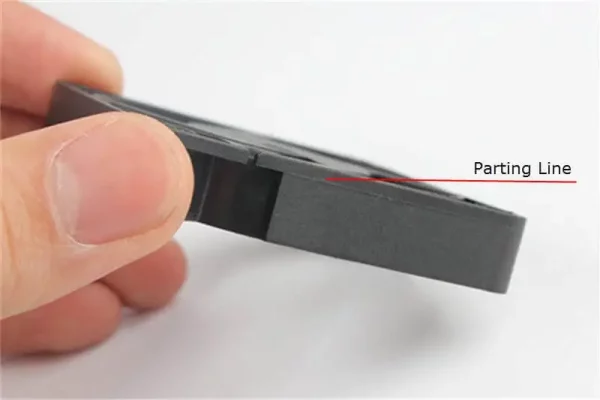 Design Guide
The parting line is not just a seam—it is the single most consequential tooling decision that dictates your CapEx, aesthetic...
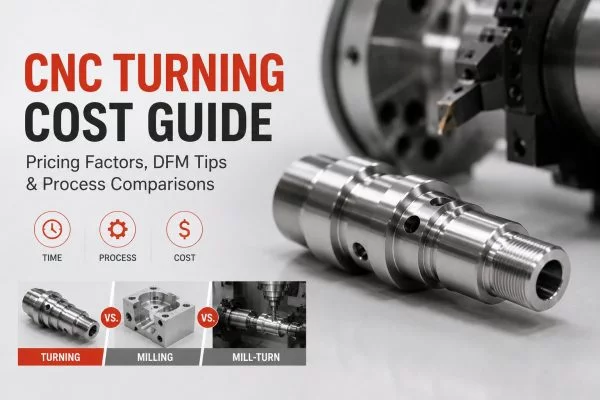 CNC Machining
Estimating the exact cost of rotational parts without a formal quote often stalls project timelines and budgeting. Underestimating your machining budget at the design phase usually leads to painful, forced redesigns right before production. Having analyzed thousands of rotational parts and their cost drivers, we broke down exactly how materials
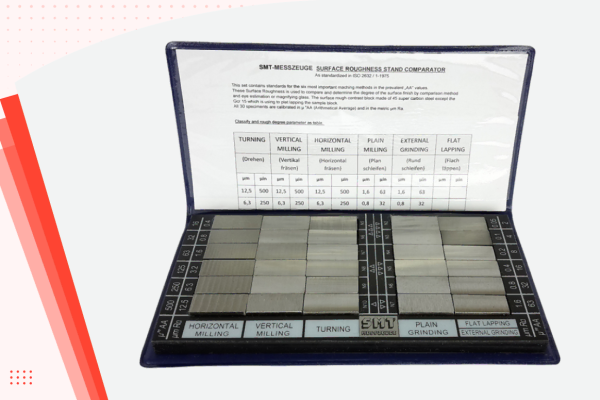 CNC Machining
In CNC machining and custom manufacturing, surface roughness is not merely an aesthetic choice—it is a critical cost driver. Over-specifying tolerances and Ra values is the leading cause of artificially inflated part costs, often increasing manufacturing expenses by over