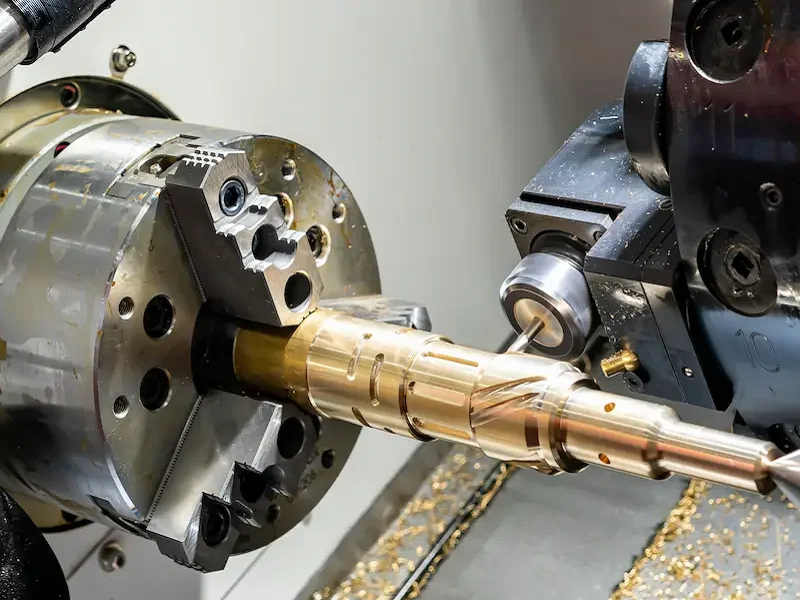
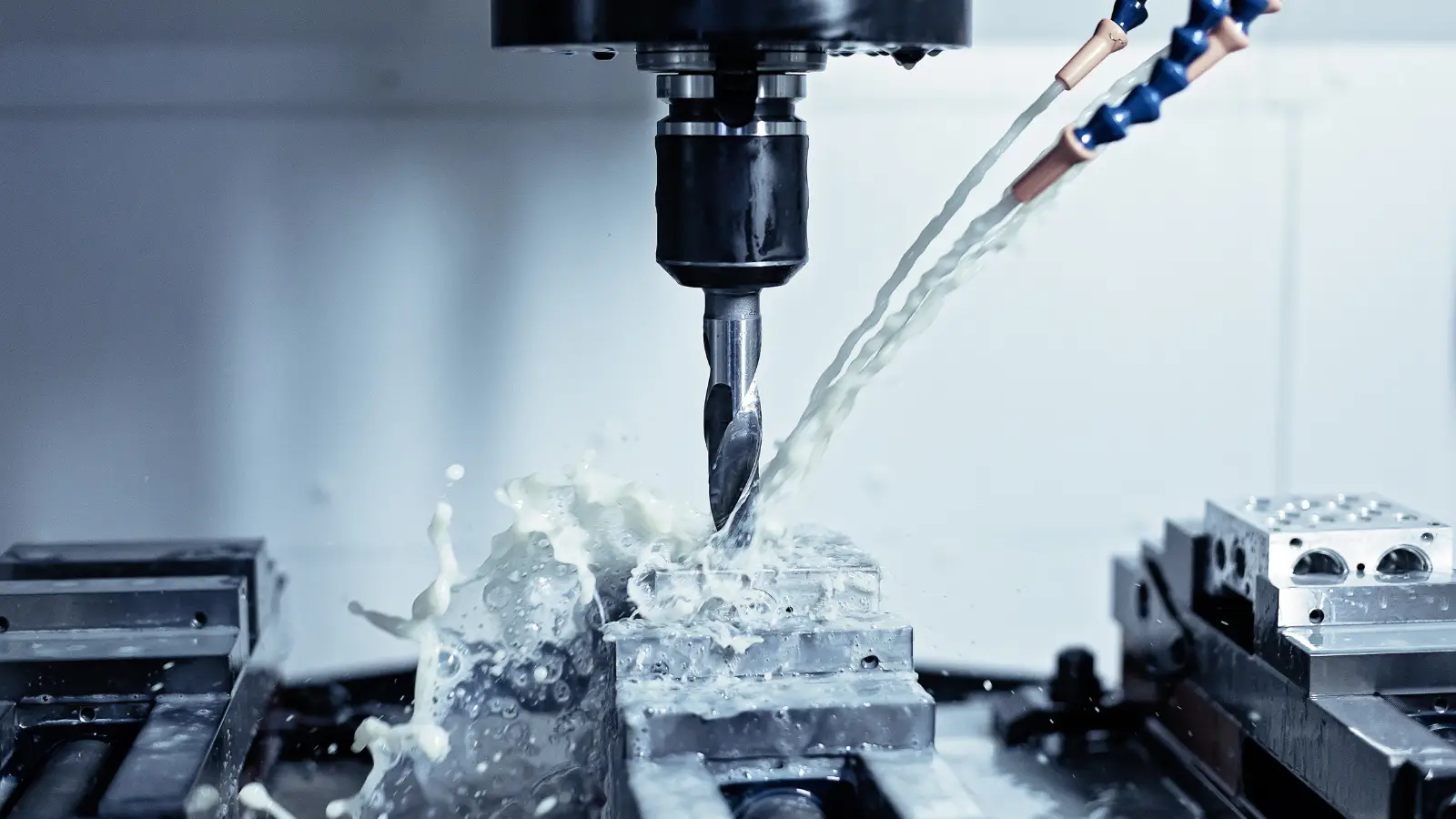
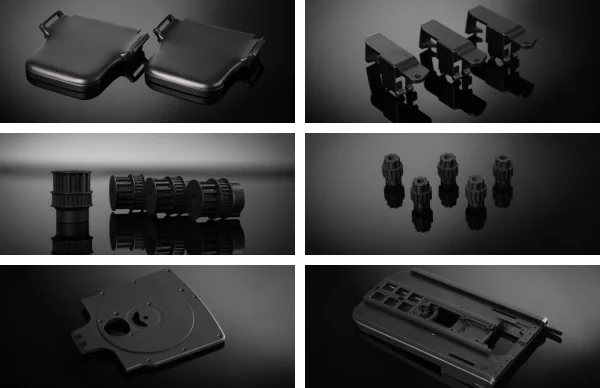
XCD is a professional CNC
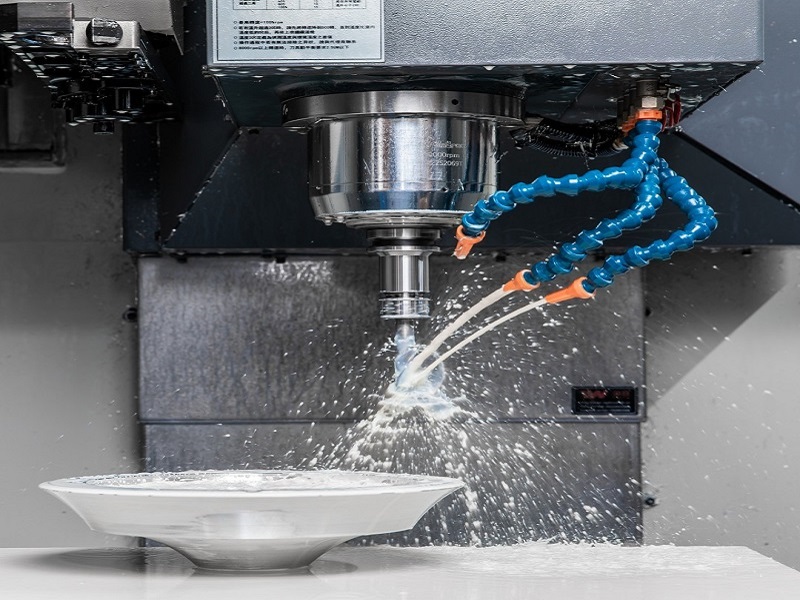
milling company providing precision CNC milling services for metal and plastic parts. From rapid
prototyping to full-scale production, we deliver custom CNC milling parts with tolerances as
tight as 0.005 mm and lead times as fast as 1 day.
From 3-axis basics to intricate
5-axis projects, our precision CNC milling makes your designs come alive with unmatched
accuracy and craftsmanship.
4-Axis CNC
Milling Services
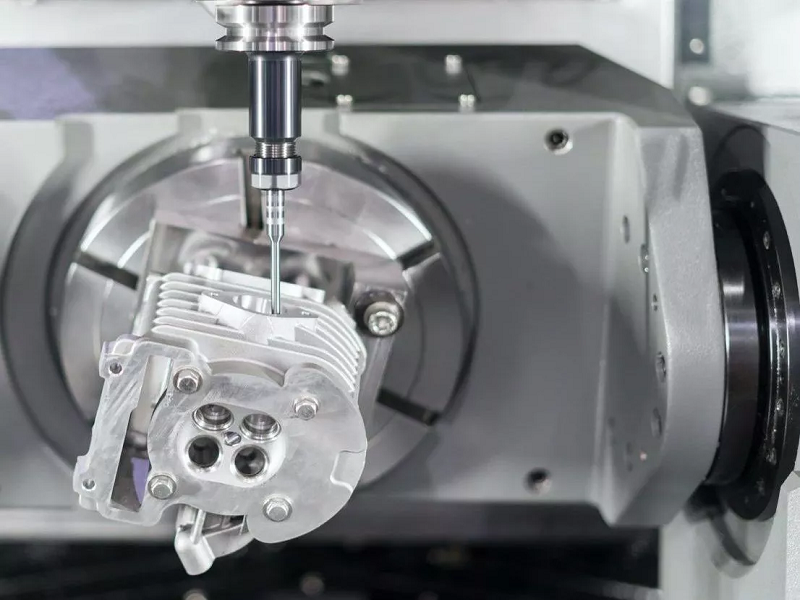
4-axis CNC milling allows
multi-side machining in a single setup, reducing repositioning errors and
improving efficiency. This service is
widely used for custom CNC milling parts with complex side features.
Our 5-axis CNC milling service
supports highly complex and precision-critical components. It is the preferred solution for
aerospace, medical, and high-tolerance CNC milling applications.
ur 3-axis CNC milling services are
ideal for cost-effective machining of simple geometries. We
deliver consistent accuracy for flat and prismatic parts using advanced CNC
milling machines.
Accelerate product development with our rapid CNC machining services. We offer fast turnaround times and specialize in quick production of high-quality prototypes and mold tooling, aiding your design verification process.
Whether you need small batches or large-scale production, we can offer you
both. With stringent tolerance controls and comprehensive capabilities, we
adapt to your volume requirements without compromising on quality.
Gain access to quality surface
finishing for custom CNC milled parts to remove aesthetic flaws and improve
the appearance of your products. We also provide rigid protection and additional
resistance and strength to your parts through superior surface finishes.
CNC milling
tolerances define how precisely part dimensions are controlled during machining. Our precision CNC milling services
follow ISO 2768-m for metals and ISO 2768-c for plastics, delivering stable,
repeatable dimensional accuracy across 3-axis, 4-axis, and 5-axis CNC milling.
3-Axis
4-Axis
5-Axis
Maximum Part Size
1000 x 500 x 500 mm
1000 x 500 x 500 mm
4000×1500×600 mm
Minimum Part Size
5 x 5 x 5 mm
5 x 5 x 5 mm
5 x 5 x 5 mm
General Tolerances
±0.1 mm
±0.1 mm
±0.05 mm
Lead Time
Delivery of simple parts can be as fast as 1 day.
5 bussiness days for most projects.
5 bussiness days for most projects.
CNC Milling
Design Guidelines
Recommended Size
Radii
Internal radii should be at least 1/3 of the cavity depth. Use larger radii whenever possible.
Threads and Tapped Holes
Diameter Φ 1.5-5 mm, depth: 3 times the diameter. Diameter Φ 5 mm or larger, depth: 4-6 times the diameter. XCD can produce threads of any specification and size as required by the customer.
Minumum Wall Thickness
For metals: 0.8 mm; For plastics: 1.5 mm. Thicker walls ensure better structural integrity.
Text
CNC Milling: Minimum width of 0.5 mm and depth of 0.1 mm. XCD can create standard text via CNC engraving or laser engraving as per customer requirements.
Holes
Minimum diameter of 1 mm. Hole depth should not exceed 4 times the diameter for best results.
Why
Engineers Choose Our CNC Milling Services
As a professional CNC milling
service factory, XCD delivers precision machining backed by in-house equipment,
experienced engineers, and stable lead times for global customers.
/01
Precision CNC
Milling Parts
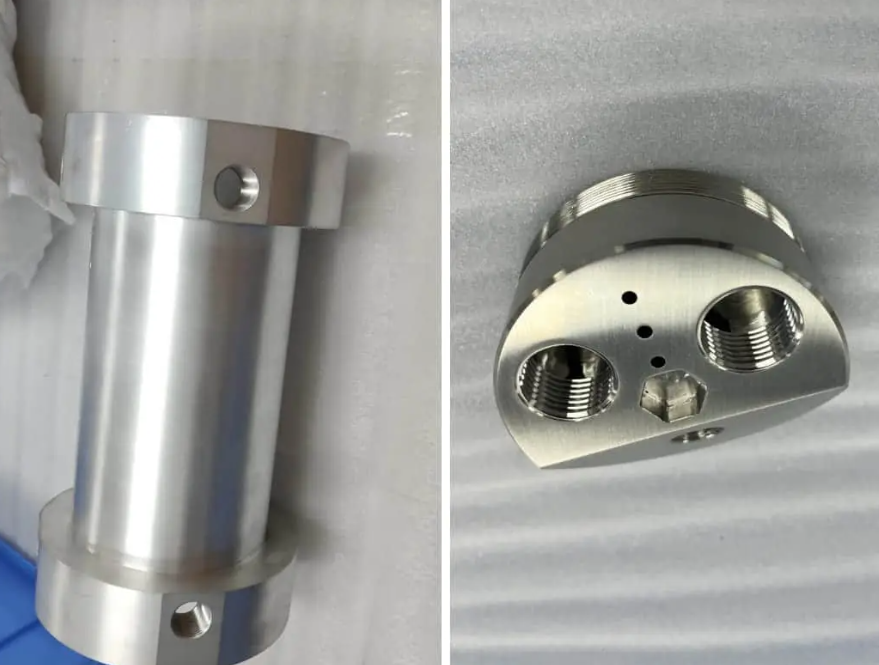
Our precision CNC milling services with tolerances as tight as ±0.01 mm. Our advanced CNC milling machines ensure consistent accuracy for custom metal and plastic parts.
/02
Fast & Scalable
CNC Milling Production
As a factory-direct CNC milling service supplier, we reduce lead times without compromising quality. Simple CNC milled parts can be delivered in as fast as 1 day.
/03
Engineering
Support
As an experienced CNC milling company, our engineers provide DFM feedback and machining guidance to optimize designs for cuostom CNC milling services, helping reduce cost and improve manufacturability.
CNC Milling Process
for Custom Part Manufacturing
Our CNC milling process starts with
CAD file analysis and DFM review, followed by precision machining on 3, 4, or
5-axis CNC milling machines. This
streamlined workflow ensures accuracy, repeatability, and efficiency for custom
CNC milling parts.
CNC Milling
Advantages & Applications
High-precision metal and plastic
parts
Complex geometries with 3/4/5-axis CNC
milling
Prototypes and production CNC milling
parts
Aerospace, automotive, medical, and
industrial components
Advantages
Advantages of CNC Milling
CNC milling offers numerous advantages for
manufacturing:
High Precision: CNC milling machines can produce parts with very tight tolerances,
ensuring high accuracy and consistency in every piece.
Complex Geometries: With the ability to move in multiple axes, CNC milling can create
intricate and complex shapes that are difficult or impossible to achieve with manual
machining.
Efficiency: Automated operation allows for continuous production, reducing lead times
and increasing productivity. Multiple parts can be produced with minimal downtime.
Flexibility: CNC milling can work with a wide range of materials, including metals,
plastics, and composites. This versatility makes it suitable for various applications.
Repeatability: Once a design is programmed, the machine can reproduce identical parts
over and over, ensuring uniformity and reducing the risk of human error.
Cost-Effective: While the initial setup can be expensive, the efficiency and precision
of CNC milling reduce overall production costs, especially for large quantities.
Safety: CNC machines operate with minimal human intervention, reducing the risk of
accidents and enhancing workplace safety.
Applications
Applications of CNC Milling
CNC milling is widely used to produce a variety of
precision parts and components:
Engine Components: Used in the manufacturing of engine blocks, cylinder heads, and
pistons, ensuring high performance and durability in automotive and aerospace
industries.
Gear Components: Essential for producing gears, splines, and shafts with tight
tolerances, used in machinery and automotive applications.
Medical Implants: Creates precise and high-quality implants such as hip joints, dental
implants, and surgical screws for the medical field.
Electronic Housings: Produces enclosures for electronic devices, ensuring proper fit and
protection for circuit boards and components.
Custom Prototypes: Allows for the rapid development and testing of prototypes, helping
designers refine their products before mass production.
Tooling and Dies: Essential for creating molds, dies, and cutting tools used in various
manufacturing processes.
Complex Aerospace Parts: Used for producing turbine blades, brackets, and other
intricate parts that require high precision and strength.
CNC Milling FAQs
Who is the father of CNC machining?
John T. Parsons is often credited as the father of CNC machining. In the late 1940s, Parsons developed the first numerical control techniques and applied them to the production of helicopter rotor blades. Working alongside engineer Frank L. Stulen, Parsons conceptualized the method of using punched tape to guide machine tools. This innovation laid the groundwork for the development of CNC (Computer Numerical Control) technology. Their pioneering work eventually led to the creation of the first CNC machines in the 1950s, which revolutionized manufacturing by improving the precision, efficiency, and repeatability of machining processes.
What’s the difference between 3D printing and CNC machining?
Manufacturing Process: 3D printing is an additive process, building parts layer by layer from materials like plastic or metal. In contrast, CNC machining is subtractive, cutting away material from a solid block to shape the final product.
Material Efficiency: 3D printing minimizes waste by using only the material needed to form the part, whereas CNC machining can produce more waste due to its subtractive nature.
Speed and Cost: For small batches and complex geometries, 3D printing can be faster and more cost-effective. CNC machining is preferable for larger volumes and materials requiring high precision and strength.
Surface Finish and Tolerances: CNC machining typically achieves better surface finishes and tighter tolerances compared to 3D printing.
What tolerances could CNC machining reach?
CNC machining is renowned for its ability to achieve high precision and tight tolerances, essential for complex and detailed parts. Typically, standard CNC machining can maintain tolerances within ±0.01 inches (±0.127 mm). XCD defaults to standardized tolerances without special requirements. For even more precise requirements, advanced CNC machines can achieve tolerances as tight as ±0.0005 inches (±0.0127 mm) under optimal conditions. The achievable tolerance depends on several factors including the material, part geometry, size, and the specific type of CNC machine used. This capability makes CNC machining a preferred choice for industries that require highly accurate components, such as aerospace, medical, and automotive sectors.
What is the G and M code in CNC machines?
G and M codes are the programming languages used in CNC machining to control CNC machine tools. G-codes are primarily used for specifying the movements of the machine, such as linear interpolation, circular movements, and other specific functions related to the actual path of the tool. M-codes, on the other hand, handle machine functions that are not directly related to the path of the tool, such as turning the machine on or off, starting or stopping the spindle, and controlling coolant. Together, G and M codes provide a comprehensive set of instructions that CNC machines follow to produce parts accurately and efficiently.
How long does it take to receive a part once an order is placed?
The lead time for receiving a CNC machined part from XCD can vary depending on several factors including the complexity of the part's design, the type of material selected, and our current production schedule. CNC machining is known for its speed, particularly for less complex parts, allowing for quick turnaround times. In fact, parts can be delivered in as fast as just one day after the machining setup is complete! However, for the most accurate time estimate tailored to your specific project, we recommend contacting us directly for a detailed quote. This way, we can provide you with a precise timeframe based on your unique requirements.
Is there a minimum order quantity (MOQ) for CNC machining at XCD?
At XCD, we understand the diverse needs of our customers, ranging from single prototypes to large-scale production runs. Consequently, we do not enforce a strict minimum order quantity (MOQ). Whether you require just one machined part or thousands, we are equipped and ready to provide tailored solutions that meet your specific requirements. Our flexible approach ensures that all clients, regardless of order size, receive the highest level of service and quality.