20,000+ customers in over 120 countries
& regions trust XCD to manufacture their custom parts
Injection Mold Surface Finishes
We offer SPI surface finishes for your injection molds. Our injection molding expert is
here to help you choose the right finish for your project. Upload your design on our quoting
platform today and receive a detailed quote within 24 hours.
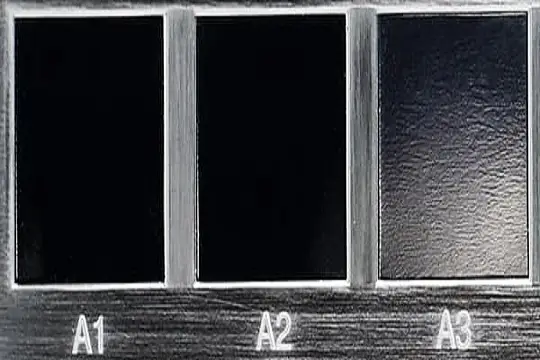
SPI A
Premium
Mirror finish with exceptional smoothness and
reflectivity. Ideal for high-end consumer products, optical components, and applications
requiring pristine surface quality.
Technical Specifications
Finishing Look
High Gloss
SPI Finish Grades
SPI A1, A2, A3
Surface Roughness Ra (μm)
SPIA1: 0.012 to 0.025 SPIA2: 0.012 to 0.025 SPIA3: 0.05 to 0.10
SPI B
High Quality
High gloss finish with excellent surface quality
and minimal visible tool marks. Perfect for automotive parts, electronics housings, and
premium consumer goods.
Technical Specifications
Finishing Look
Semi Gloss
SPI Finish Grades
SPI B1, B2, B3
Surface Roughness Ra (μm)
SPI B1: 0.05 to 0.10 SPI B2: 0.10 to 0.15 SPI B3: 0.28 to 0.32
SPI C
Premium
Semi-gloss finish with good surface quality and
moderate tool marks. Suitable for general purpose applications, household items, and
cost-effective production runs.
Technical Specifications
Finishing Look
Low Gloss
SPI Finish Grades
SPI C1, C2, C3
Surface Roughness Ra (μm)
SPI C1: 0.35 to 0.40 SPI C2: 0.45 to 0.55 SPI C3: 0.63 to 0.70
SPI D
High Quality
Matte finish with visible tool marks and textured
appearance. Ideal for industrial applications, prototypes, and products where surface finish
is not critical.
Technical Specifications
Finishing Look
Matte
SPI Finish Grades
SPI D1, D2, D3
Surface Roughness Ra (μm)
SPI D1: 0.80 to 1.00 SPI D2: 1.00 to 2.80
SPI D3: 3.20 to 18.0
Plastic Injection Molding Services for Custom Parts
XCD makes it easy to move from on-demand
prototypes to production molding for high-quality, cost-effective plastic parts in days. With
access to our trusted supplier network and China-based facilities equipped with 90 to 830-ton
presses, we can produce parts of any size or complexity. Our capabilities include precision mold
tooling, overmolding, and insert molding, all supported by expert engineering consultation.
Working with a single partner from design to production speeds up lead times, improves part
consistency, and gives you the flexibility to scale quickly while keeping costs under
control.
Injection Mold Tooling
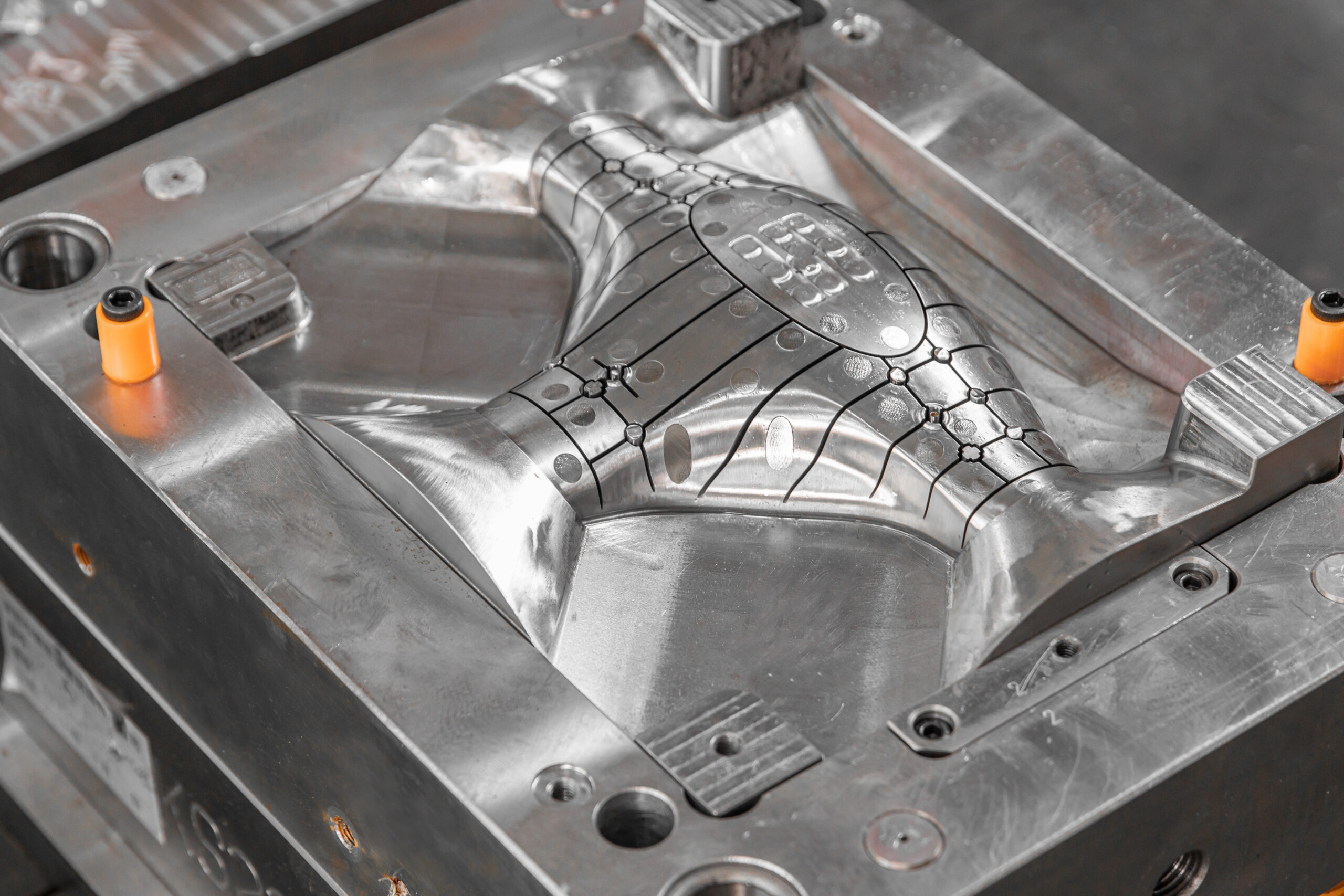
Get high-quality aluminum and steel injection molds
customized to your needs. We achieve tight tolerances of 0.0008 in (0.02 mm) and offer free
mold flow analysis. Ideal for mass production.
Overmolding
Overmolding is a multi-step injection molding process
that bonds plastic to another component (substrate), creating an integrated, durable product.
Offers color and texture options.
Insert Molding
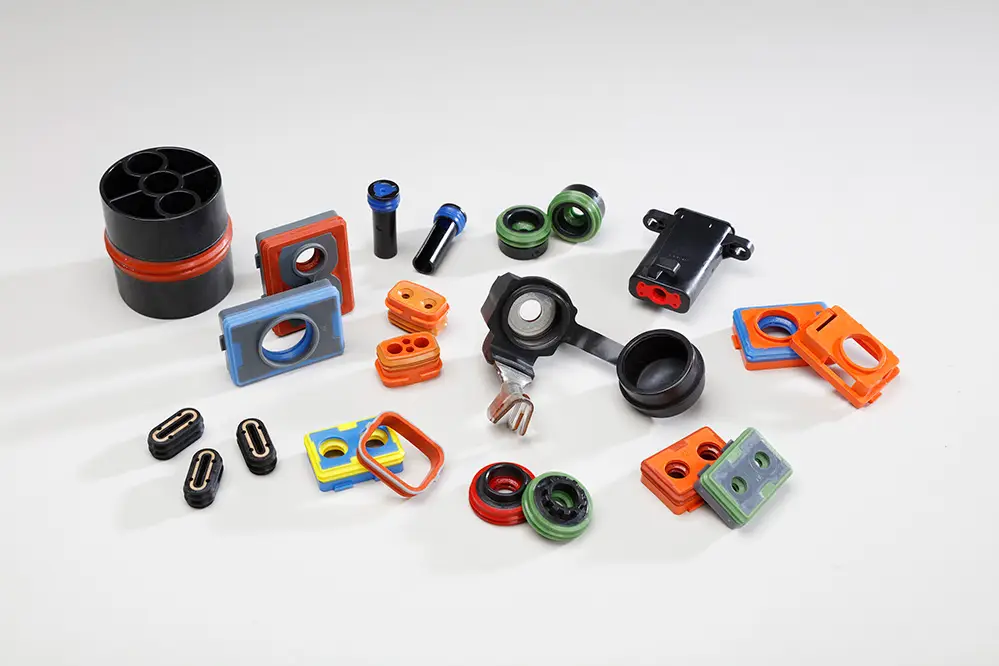
A subset of injection molding techniques where
combines engineering plastics with pre-placed inserts in the mold cavity. It eliminates the need
for fasteners.
Injection Molding Manufacturing
Network
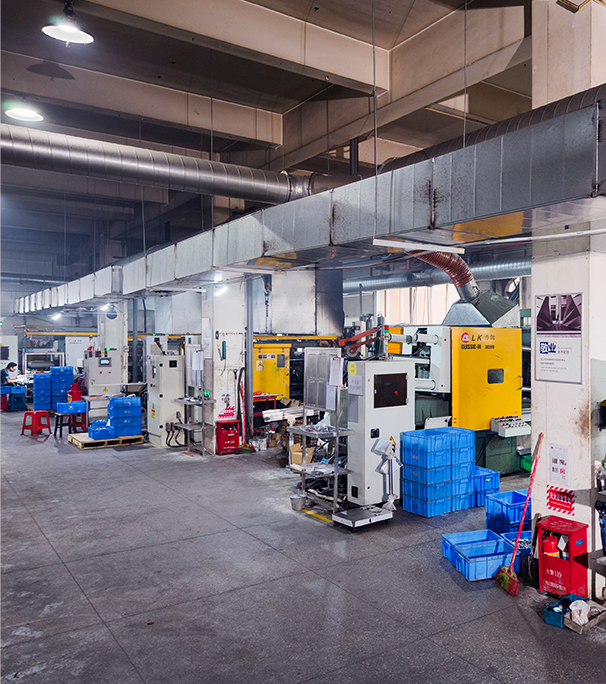
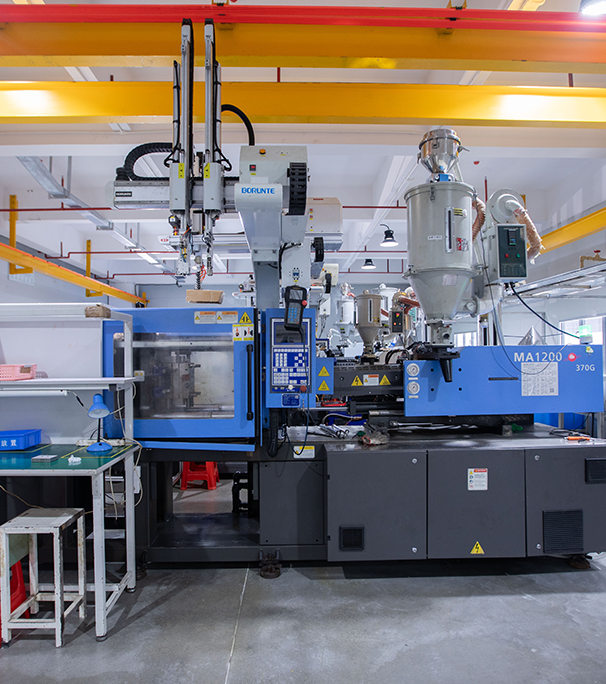
XCD’s injection molding network combines 50 advanced machines capable
of 90 to 830 tons with experienced project managers to handle projects of any size
or complexity. We produce plastic molded prototypes and production parts with global
shipping from China’s injection molding supplier. Streamline every order with
clear communication and expert guidence to keep production on schedule and meet your
specifications.
Our injection molding services cover every
stage, from design to delivery. We produce prototypes and large-scale
parts with tight tolerances, certified quality, and quick lead times for
global customers.
Standards
Description
Maximum Part Size
1200×1000×500 mm
Manimum Part Size
5×5×5 mm
Part to Part Repeatability
+/- 0.1 mm
Mold Cavities
Single-cavity molds, multi-cavity molds, family molds
Available Mold Types
Steel and aluminum molds. Production levels below 1000, 5000, 30000, and over 100000 uses
Mold Cavity Tolerances
+/- 0.02 mm
Secondary Operations
Mold texturing, pad printing, laser engraving, threaded inserts, and basic assembly
Undercuts
Y-type, L-type undercuts
Wall Thickness
0.5 mm to 5 mm
Draft
0.5° to 2°
Ribs/Gussets
0.5 mm to 3 mm thick
Bosses
Diameter 3 mm to 10 mm
Lead Time
Most orders can be completed within 15 working days
Looking for custom solutions? Our engineering team supports your exact needs to deliver optimal
results and reliable part performance.
From automotive to electronics, XCD’s
injection molding services deliver reliable, cost-effective solutions to fit the custom demands
of each industry.
Our ISO-certified factories do in-process checks and post-production tests to make sure every custom molded part is precise and consistent, no matter how complex.
/02
Fast Lead Time
We use certified local factories and a strong supply chain to speed up product development, delivering plastic parts in as little as 2 weeks.
/03
Engineering
Support
Talk to our experts with 10+ years of experience in injection molding for help with mold design, material selection, and finishes—making the whole process smoother.
We value quality from design to production. Cross-team
reviews and strict controls help achieve a 90% first-pass yield for all plastic molded parts.
Mold and Pre-produdction
Inspection
Proper mold design and pre-production checks are
key to injection molding quality. Engineers consider part geometry,
material flow, and cooling systems to guarantee smooth production. Trial
molds are tested to confirm all functions work correctly, providing
stable and consistent results.
In Process Quality Control
Continuous checks during production keep custom
molded parts consistent. Injection machine parameters such as speed,
pressure, and temperature are monitored within set limits. Regular
inspections of part dimensions and appearance help detect and fix issues
quickly.
Final Inspection
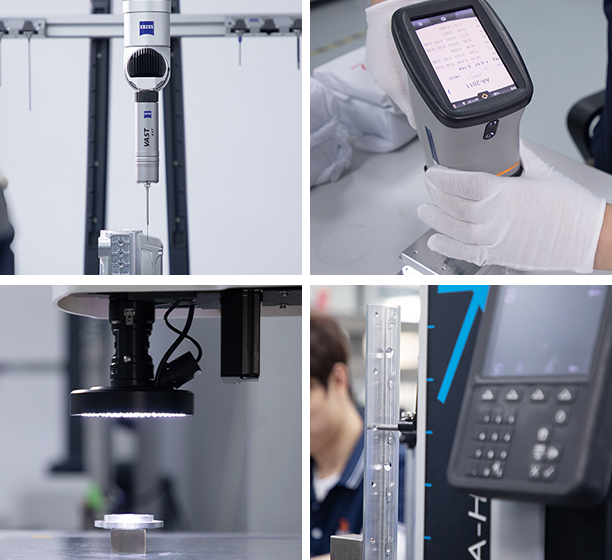
Completed parts undergo thorough final inspection
to meet design and quality standards. Teams check dimensions,
appearance, and physical properties. Precision instruments like
coordinate measuring machines (CMM) and colorimeters verify that all
components meet strict standards.
Injection molding is huge in making a
ton of products—anything from car parts to medical devices. It’s
super efficient because it can produce lots of identical plastic parts with
tight tolerances, all at a low cost per part. That’s why so many
industries rely on it for mass production. Whether it’s a simple or
complex design, it keeps quality high and production fast.
Gears: High-tolerance, durable gears for mechanical and
electronic devices.
Housings: Strong housings for electronics, automotive
parts, and industrial machines.
Enclosures: Precise enclosures for electronics,
protecting internal components.
Handles: Ergonomic, durable handles for tools,
appliances, and products.
Caps and Closures: Efficient caps and closures for
bottles, ensuring tight seals.
Connectors: Small, intricate connectors for electrical
and electronic needs.
Advantages of Injection Molding
High-volume, consistent production
Low cost per unit after setup
Works with many materials (plastics, LSR)
High precision for complex designs
Disadvantages of Injection Molding
High upfront tooling costs
Longer lead times
Design limitations
Not cost-effective for low-volume runs
Injection Mold Tooling FAQs
How long does it take to receive a part once an order is placed?
The lead time for receiving a CNC machined part from XCD can vary depending on several factors including the complexity of the part's design, the type of material selected, and our current production schedule. CNC machining is known for its speed, particularly for less complex parts, allowing for quick turnaround times. In fact, parts can be delivered in as fast as just one day after the machining setup is complete! However, for the most accurate time estimate tailored to your specific project, we recommend contacting us directly for a detailed quote. This way, we can provide you with a precise timeframe based on your unique requirements.
How much does your CNC machining service cost?
At XCD, every product goes through strict verification—from trial production and inspection testing to customer confirmation—before shipment. Our quality assurance process ensures that all parts meet the agreed specifications before delivery, minimizing the risk of nonconformities. We take pride in our precision and reliability, and every shipment is the result of a joint confirmation between our engineers and customers.
Is there a minimum order quantity (MOQ) for CNC machining at XCD?
At XCD, we understand the diverse needs of our customers, ranging from single prototypes to large-scale production runs. Consequently, we do not enforce a strict minimum order quantity (MOQ). Whether you require just one machined part or thousands, we are equipped and ready to provide tailored solutions that meet your specific requirements. Our flexible approach ensures that all clients, regardless of order size, receive the highest level of service and quality.
What are the advantages and disadvantages of CNC machining?
Advantages of CNC Machining
Precision and Repeatability: CNC machining ensures high precision and consistent replication of parts, crucial for complex designs with tight tolerances.
Reduced Human Error: The automated nature of CNC machining minimizes human error, enhancing the overall quality of production.
Efficiency and Speed: Automation allows for faster production cycles, enabling quicker turnaround times than manual processes.
Material Flexibility: CNC machines can work with a diverse range of materials, including metals, plastics, and composites, offering versatility across various applications.
Software Integration: Advanced CNC software supports quick design changes and updates, facilitating rapid prototyping and easy customization.
Cost-Effective for Large Runs: While setup costs are higher, per-unit costs decrease significantly with larger production volumes, making it cost-effective for mass production.
Disadvantages of CNC Machining
High Initial Costs: CNC machinery and its maintenance represent significant investments, making initial setup expensive, especially for small-scale operations.
Skill Requirements: Operating CNC machines requires highly skilled personnel, which can increase training costs and limit accessibility.
Less Cost-Effective for Small Runs: Due to setup and programming time, CNC machining may not be economical for producing small quantities of parts.
Material Waste: CNC machining often involves subtractive processes, leading to more material waste compared to additive manufacturing.
Limited to Material Hardness: Extremely hard materials can wear out CNC tools quickly, potentially increasing operational costs and downtime.
Can you provide insight into your CNC machining capacity?
Certainly! At XCD, we have the capacity to manufacture over 10,000 diverse prototypes each month, ranging from straightforward to complex designs. Our production capabilities are supported by more than 200 state-of-the-art CNC machines. We also take pride in our team of over 100 skilled technical experts who ensure precision and quality in every project. This extensive infrastructure allows us to meet large-scale demands efficiently, making us a reliable partner for all your CNC machining needs. Whether your project is big or small, our resources are geared to deliver with excellence.